
Engineered CV training data, models, and tools.
Unique images produce unique models.
Privileged ground truth produces unique capabilities.
Helping CV engineers say YES to differentiating features
We don’t need your data to start. No collection, no labelled set, nothing captured first.
Rendering today, shipping now.
How do you train a model
when you have no images?
A model learns its features from images. No images, no features, no model. The answer is always the same: go and get them first. Wait for the season, send a crew, budget six months for labelling, come back next year.
We don’t need your data to start.
No collection. No labelled set. Nothing captured first.
Tell us what the model has to handle, and the images are built for it.
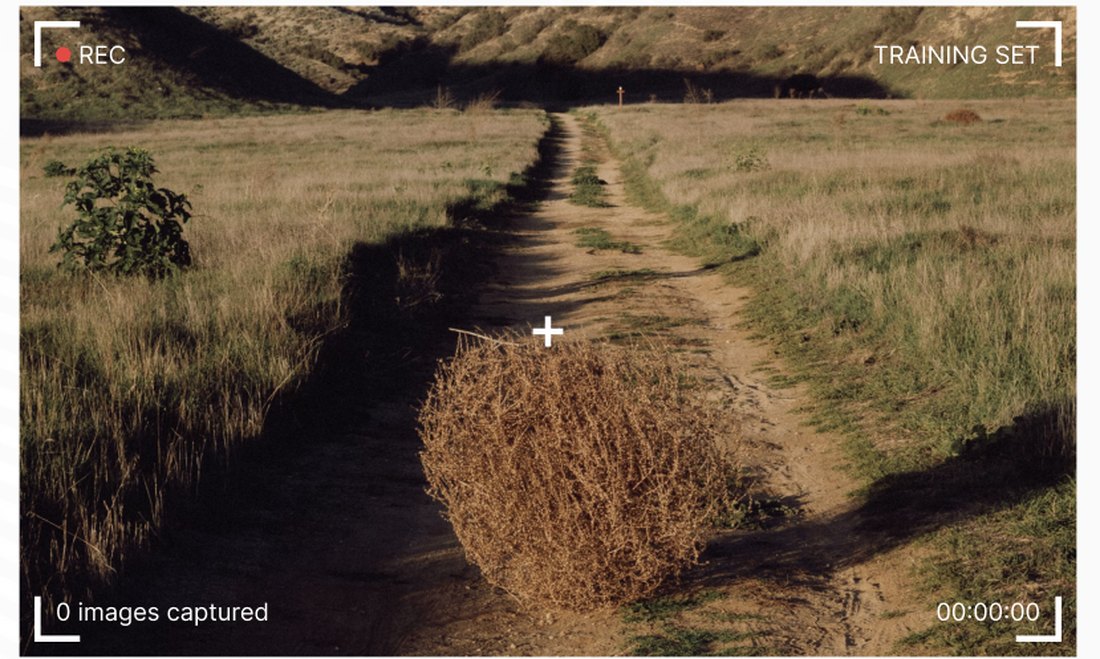
Your model should be the only one of its kind
Standard Models
- Pre-trained against classes you'll never use
- Trained on only whatever was photographed
- Sized for the general use case
- Hedging confidence across everything
- Manifold space wasted
Your Model
- Your classes, and only your classes
- Your lighting, weather, angles, distances
- Your edge cases, weighted how you choose
- Smaller, needing less hardware to run
Imagine .33 mAP 50:95 in 2 epochs from SCRATCH.
Specific for YOUR data. YOUR use case. Unique to your business
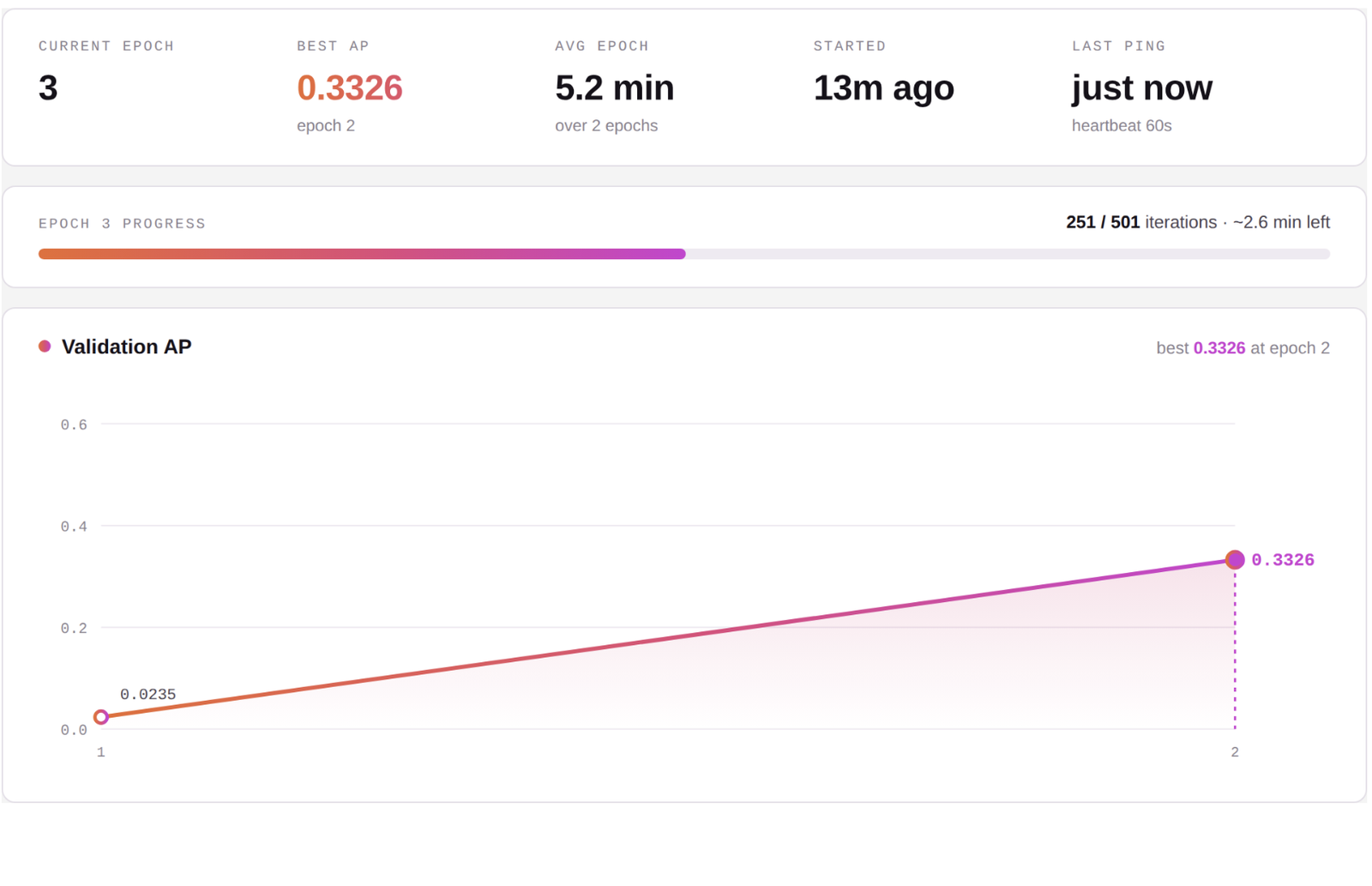
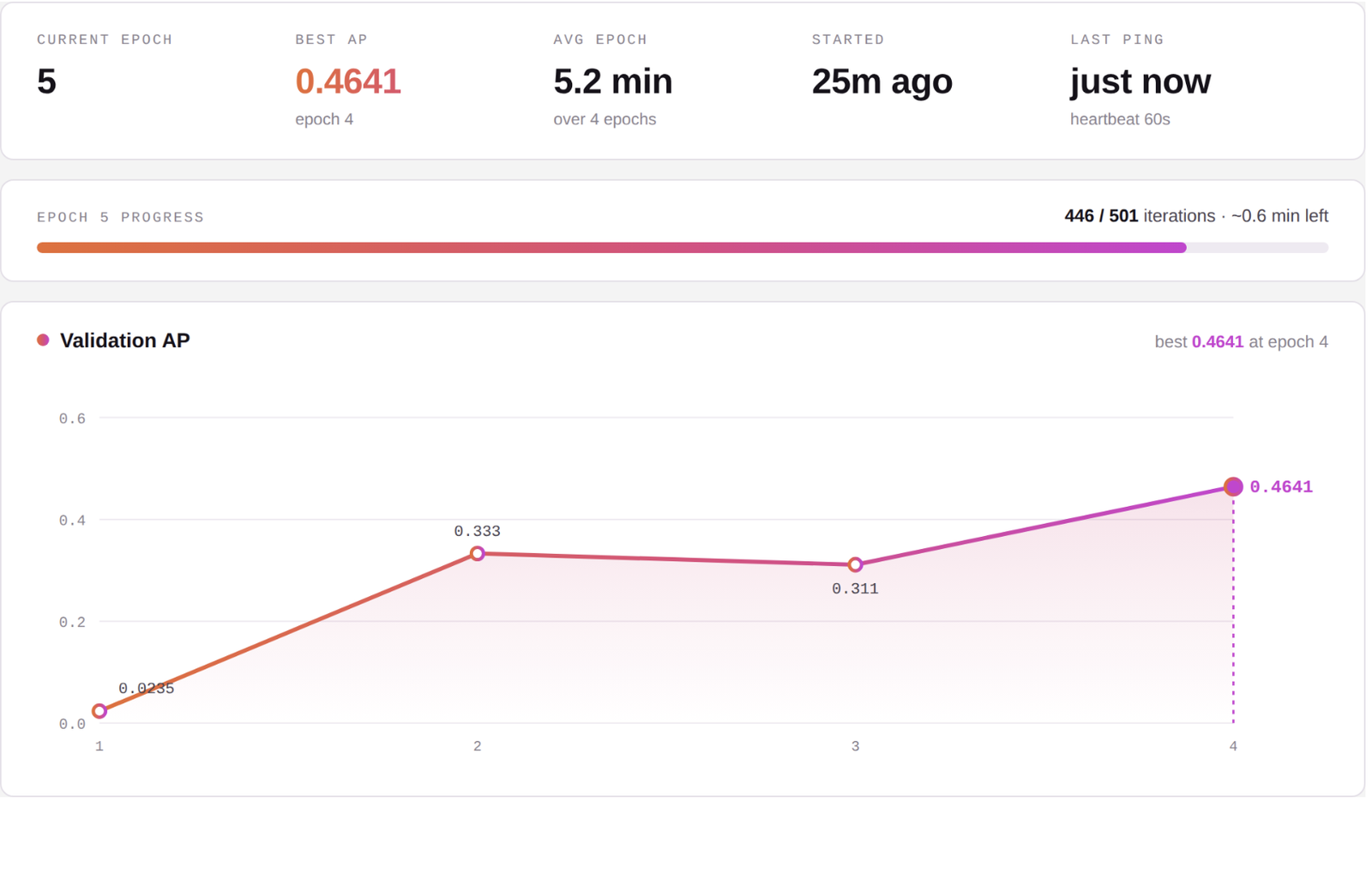
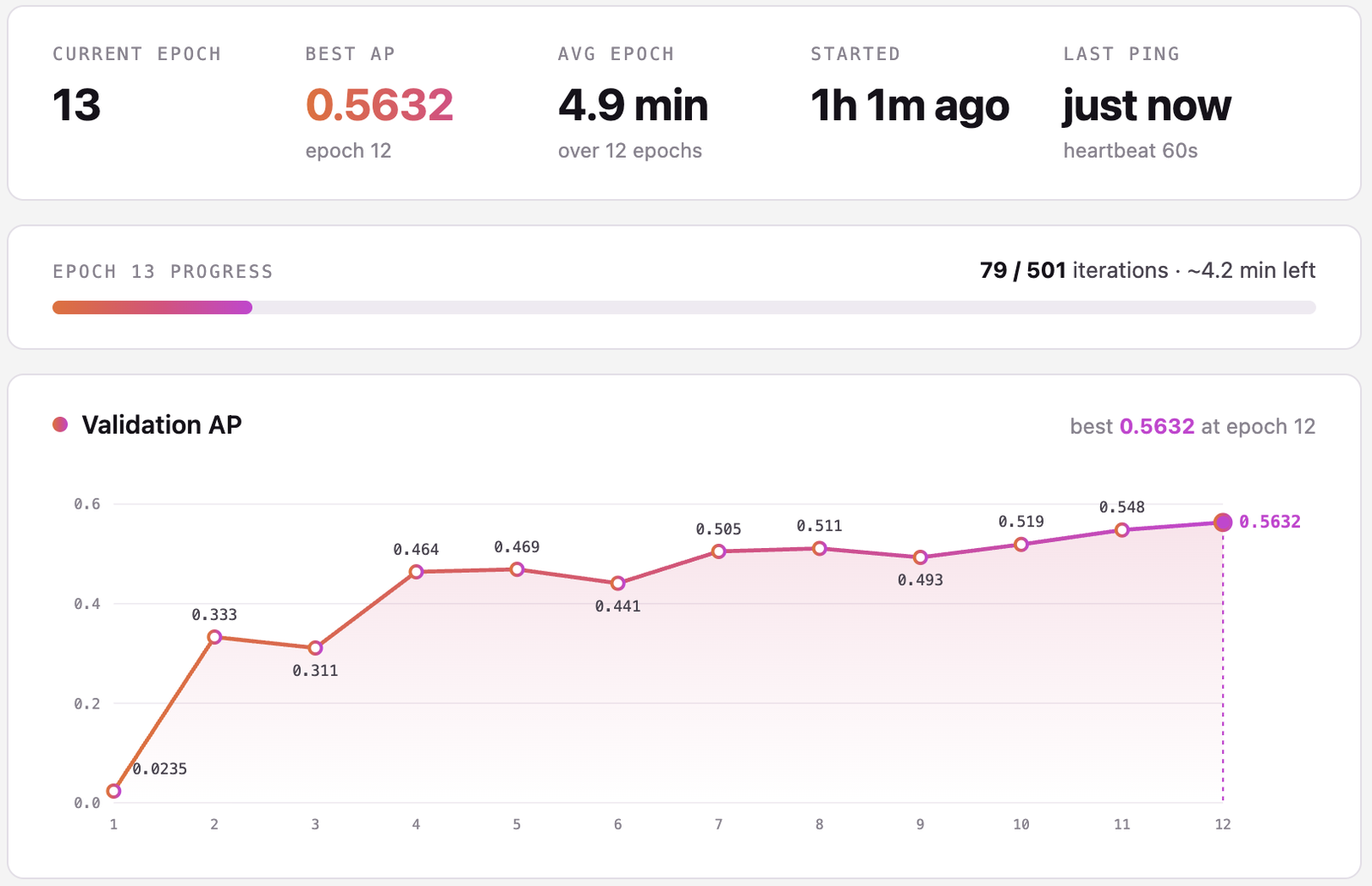
114K Synetic images. 100% Synthetic. Engineered, predictable, exactly what your model needs. No bloat, faster training, precise.
University of South Carolina“The SYNETIC-generated dataset provided a remarkably clean and robust training signal. Our analysis confirmed the superior feature diversity of the synthetic data.”
+34.24% mAP50-95 over real-only training
Across seven architectures — six YOLO variants and RT-DETR — measured on a real-world validation set and independently reproduced.
Read the paper →
AIGEN“We trained a model on 99% synthetic data that successfully deployed on our field robots, identifying weeds and triggering treatment without damaging a single crop plant. The data quality was solid enough that we went straight from synthetic training to real-world deployment with minimal friction.”
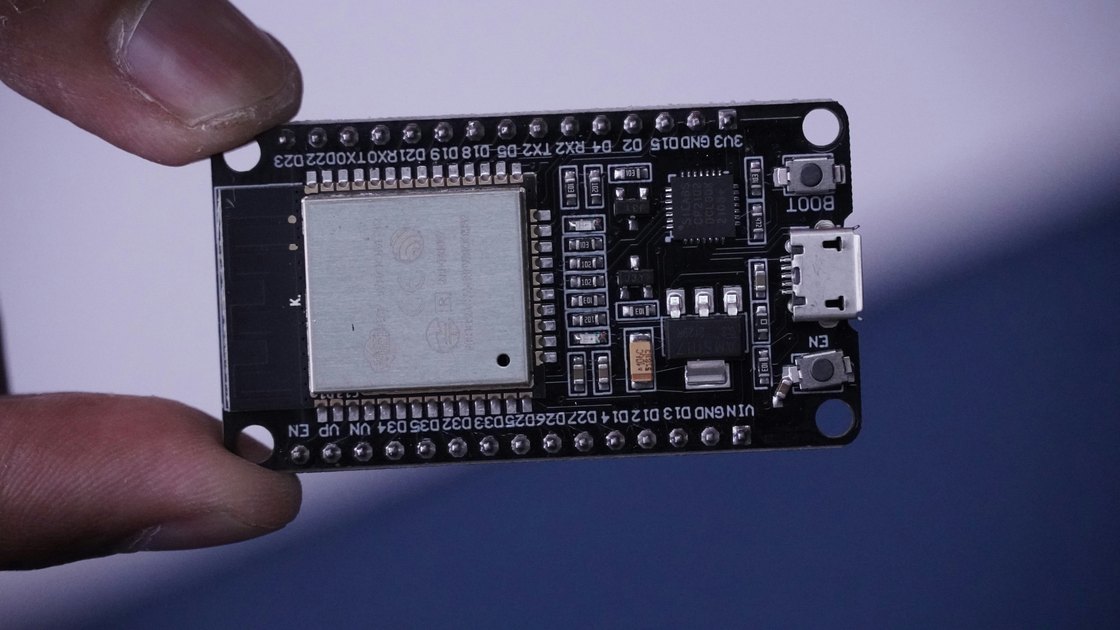
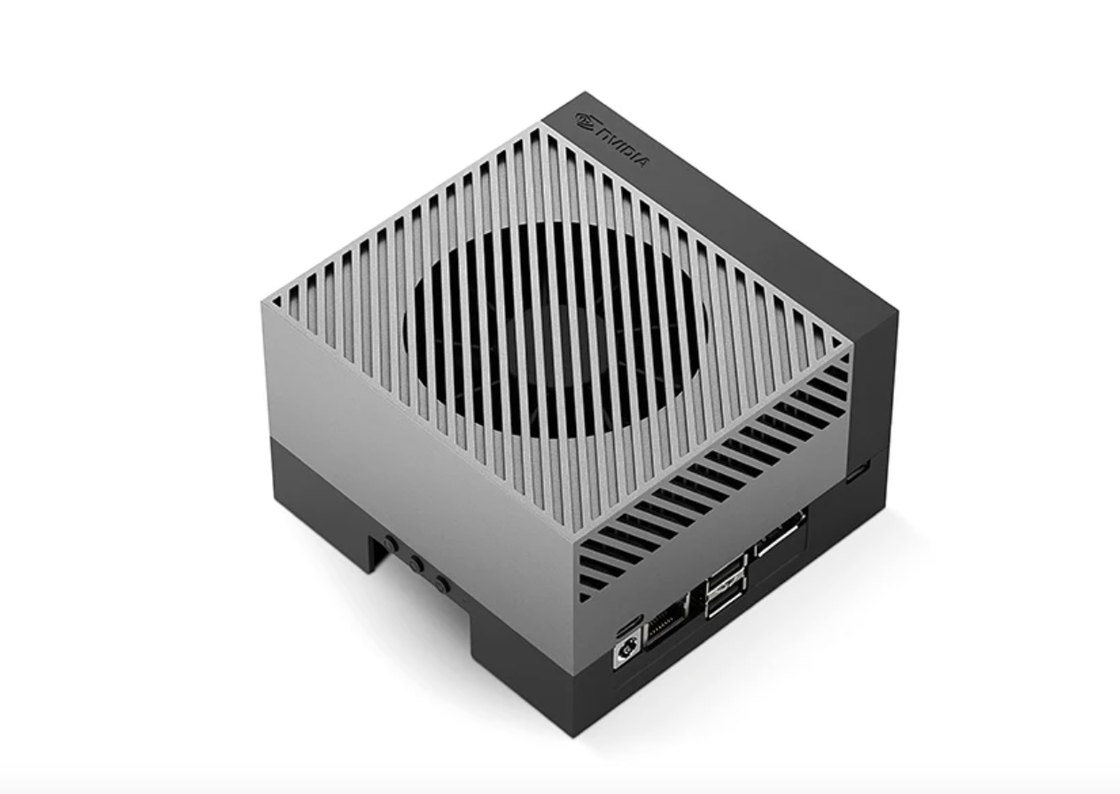
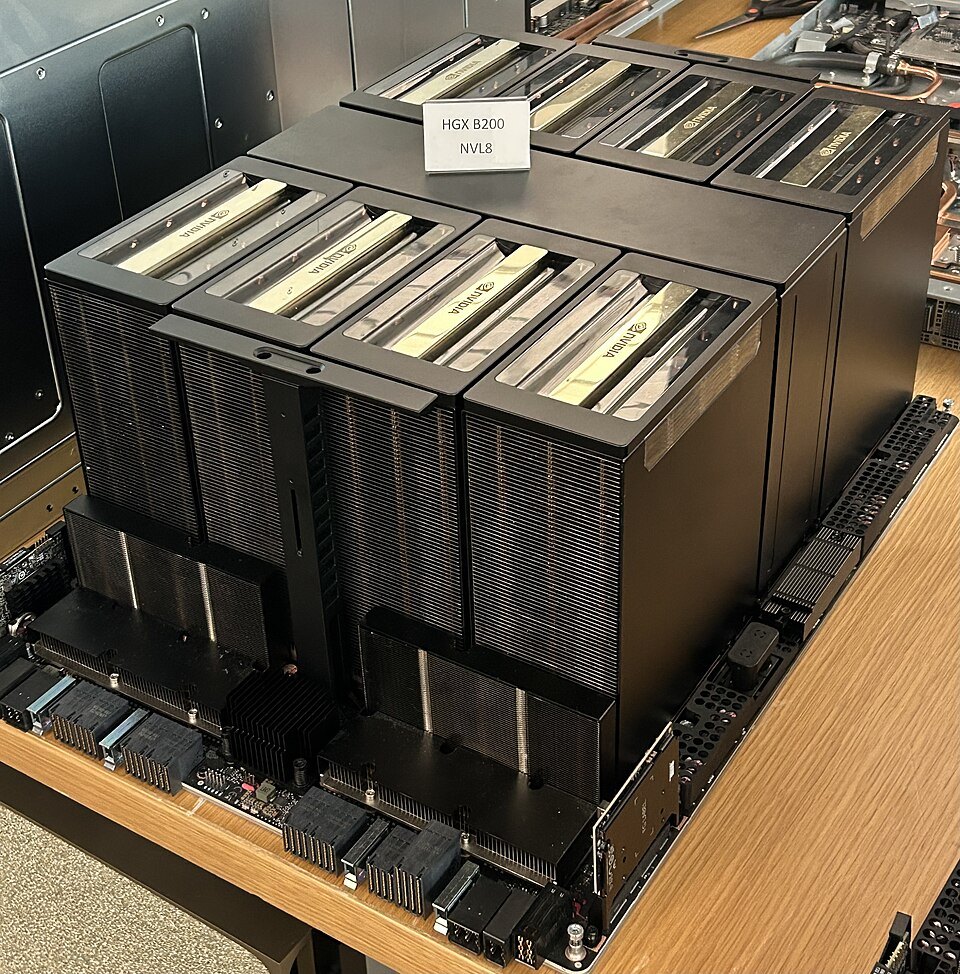
From ESP32 to Orin AGX to B200, Synetic models are built from scratch. No pre-trained backbone carrying classes you’ll never use. Smaller, cheaper models that run on more hardware, with room left for more features.
You shouldn’t have to wait six months…
…Give us two to four weeks
A Season or six months
You get only the conditions you were able to capture.
2–4 Weeks
You choose the conditions, including the ones you have never captured and that could never be staged.
Only four steps, you own deliverables at the end
Conversation
Tell us what you'd build. We'll tell you honestly whether it's a problem we solve.
Scoped
Your objects, your cameras, your conditions, your edge cases. And how you'll know it worked.
Delivery
Data, or a trained model, or both. You own it outright. No royalties, no restrictions.
We keep going
Iteration and retraining included, until it does what you needed it to do.
All we need from you is:
Not your data. Not a labelled set. Nothing collected first.
We use customer imagery for the validation set only.
How the images get made
Hand-built assets
The objects are modelled, not scraped. Someone builds the thing once, properly; the geometry, the materials, the way it deforms and wears. Fidelity enters the system at the asset, so every scene the asset appears in inherits it.
Procedural generation
Scenes are assembled by rule rather than by hand: lighting, weather, camera placement, distance, clutter and occlusion vary across every frame. Because the scene is constructed rather than captured, its ground truth is known before the image is rendered.
Gap-directed generation
An algorithm measures what the training set is missing and generates it. The set converges on what the model actually needs instead of growing indiscriminately.
The loop decides what to build next.
SYNETIC does
what other models can’t
A labeller can draw a box. They cannot draw the hidden half of an occluded object, a distance in metres for every pixel, the direction a surface faces, or a count in a scene too crowded to enumerate.
Those labels aren’t expensive. They’re absent.
The information was never in the photograph, so no annotation budget of any size produces them. Synetic can supply images that carry it.
- Full depth, per pixel
- Annotated hidden objects
- Surface normals
- Identity through total occlusion
- Density where nothing can be counted
- Metric size, volume and weight
- Rare events nobody can stage
The same animals, two models
One camera over a cattle feedlot, run through an off-the-shelf detector and through a model built on Synetic data. Same frame, same instant.
Per animal: a track ID that persists, the group it belongs to, an estimated weight in pounds, and what it is doing — eating, walking, lying down. Cattle weight estimation from an ordinary camera, with nothing worn and no scale.
The other model: every animal is 1:Cow — except the ones it calls Pig. Watch the one at the bottom: it flips between Pig and Chicken from frame to frame. Nothing about it persists.
You can’t weigh a herd with a model that thinks one of them is a chicken.
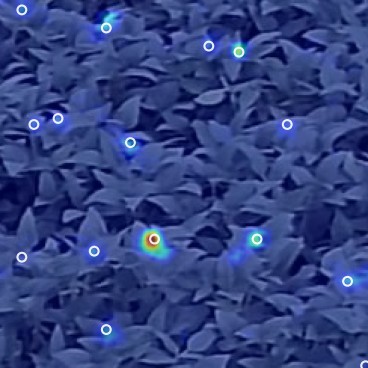
How can I count soy plants after canopy closure with an RGB camera?
From above, you mostly can’t. Once soybean canopy closes, leaves from neighboring plants interlock and individual plants aren’t separable in nadir RGB imagery.

With privileged ground truth you aren’t limited by industry boundaries
A stop sign 8 × 10 pixels across.
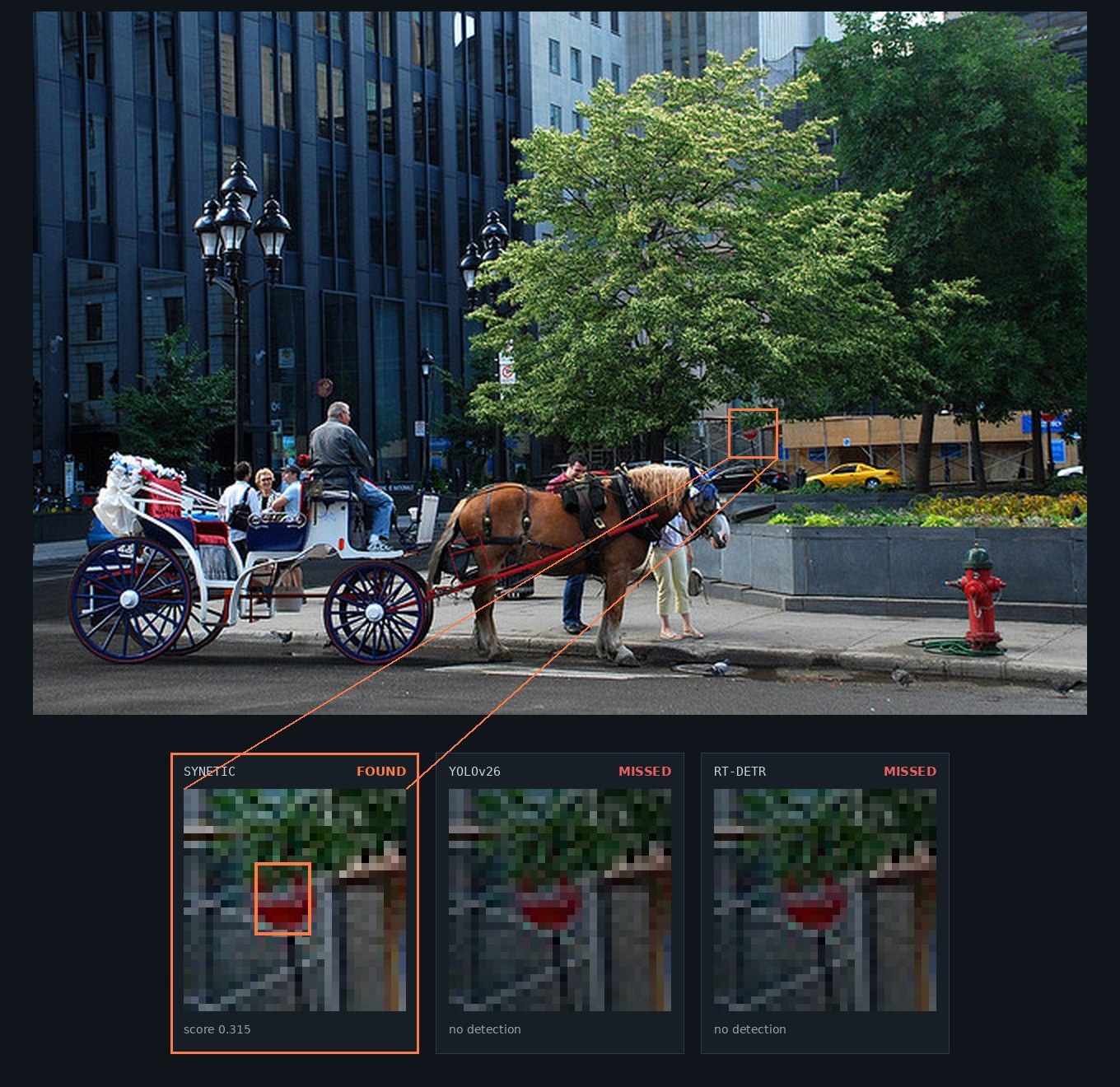
Synetic images are so clear, clean and pristine that they can power tiny detections. Don’t let your small detections go unnoticed
Domain-agnostic, by construction.
Nothing in the method is specific to an industry. If the objects can be described, the scenes can be built — these are places it has already been used, not the limit of where it works.
Agriculture
Yield estimation, plant counting after canopy closure, weed identification for targeted spraying, crop stage classification, disease and stress detection.
Livestock
Per-animal identification and persistent tracking, weight estimation from a camera, behaviour classification — feeding, lying, walking — and lameness or health monitoring.
Robotics
Grasping and manipulation, navigation and obstacle avoidance, perception for field and warehouse robots, and sim-to-real transfer without a real-image training set.
Industrial
Surface defect detection, solder bridges and misalignment, assembly verification, part counting, and PPE compliance on the floor.
Logistics
Trailer and container number reading in motion, yard management, package and pallet counting, dock monitoring, and damage inspection.
Transportation
Following distance and closing speed, small-object detection at range, traffic counting and classification, and incident detection from cameras already on the pole.
Security
Perimeter intrusion, weapon and threat detection, person and vehicle tracking across cameras, and loitering or anomaly detection.
Retail
Shelf stock and facing detection, queue measurement, footfall and customer journey analytics without facial recognition, and shrink detection.
Common questions
How can synthetic data be better than real data?
Real-world datasets are limited by what you can photograph and afford to label. Rendered data covers edge cases systematically and carries exact labels, because the scene is known before the image exists. The University of South Carolina benchmark measured +34.24% mAP50-95 over real-only training across seven architectures, on a real-world validation set.
Will a model trained on synthetic data work on my real cameras?
Yes. Physics-based rendering keeps the synthetic and real distributions close enough that there is no meaningful domain gap. The +34.24% improvement was measured on real-world validation imagery, not on synthetic test data, and Aigen deployed a model trained on 99% synthetic data directly onto field robots.
What if my use case is unique?
That is the case Synetic is built for. Tell us what the model has to handle — your objects, your cameras, your lighting, your edge cases — and the images are built for exactly that. Synetic has built hundreds of models across dozens of industries. If you can describe it, it can be rendered, including conditions you have never captured and events that cannot be staged.
Do I need to provide my own data to get started?
No. No collection, no labelled set, nothing captured first. Customer imagery is used for one thing only: the validation set. You can add real data to training later, though the USC benchmark found that mixing in a small real dataset caused a consistent 10–15% decline in generalisable performance.
How is Synetic different from NVIDIA Omniverse?
Omniverse is a rendering and simulation engine you operate yourself: you build the scenes, run the pipeline and produce the data. Synetic is a data source — you describe the problem and receive finished, annotated training sets, or a trained model. Different layer of the stack; Synetic's own rendering runs on NVIDIA hardware.
What ground truth can synthetic data provide that annotation cannot?
Labels that are absent from a photograph rather than merely expensive to draw: full depth for every pixel, the hidden half of an occluded object, surface normals, identity through total occlusion, density where nothing can be counted individually, metric size, volume and weight, and rare events nobody can stage.
How long does a Synetic engagement take, and who owns the result?
Two to four weeks from scoping to delivery, against a season or roughly six months for a real collection effort. You receive the dataset, a trained model, or both, and you own the output outright — no royalties and no restrictions. Iteration and retraining are included for three months.